Be yourself; Everyone else is already taken.
— Oscar Wilde.
This is the first post on my new blog. I’m just getting this new blog going, so stay tuned for more. Subscribe below to get notified when I post new updates.
Be yourself; Everyone else is already taken.
— Oscar Wilde.
This is the first post on my new blog. I’m just getting this new blog going, so stay tuned for more. Subscribe below to get notified when I post new updates.
Question 2.1
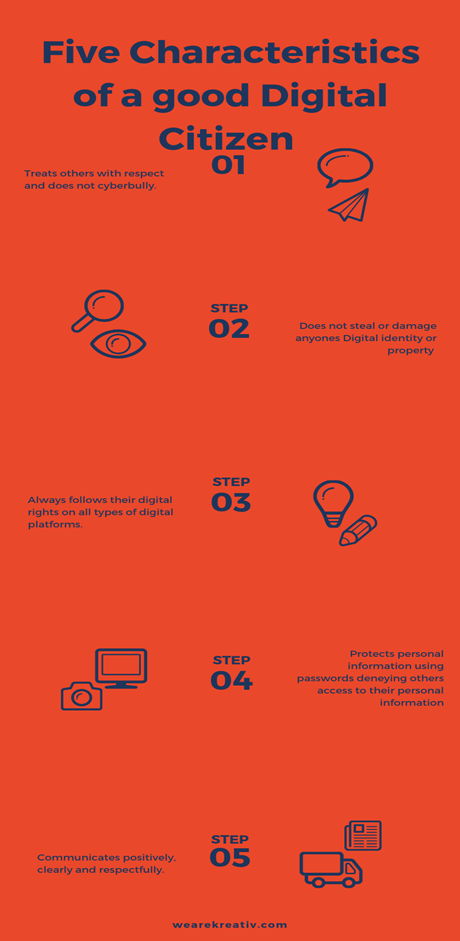
Question 2.2
Having a digital footprint has its pro’s and its con’s. it all depends on the situation. When it comes to trying to reconnect with friends or to have a good reputation online then digital footprint comes in handy but if you have posted and inappropriate photo online, that photo will never be lost because of digital footprint so I thing that depending on the situation will determine if a digital footprint is bad or not.
Question 1.1
There are Nine elements of Digital Citizenship and they are:
Digital Access: technology is not equally accessible for everyone. The starting point of Digital Citizenship is to work towards making technology equally accessible for everyone.
Digital Commerce: there is a huge amount of buying and selling of goods that happens electronically which is great but the buyer or seller needs to be aware of the issues that come with the buying and selling.
Digital Communication: we have the ability to communicate and share information all over the world in a matter of seconds.
Digital Literacy: this is the process of teaching children how to use and learn about technology. There is new technology being created everyday which is used differently and for different things and it is important that people are learning how this technology works.
Digital Etiquette: there are rules and regulations that have been created to stop people from sharing inappropriate things that might offend others. This is a huge problem sometimes as not many people have Digital Etiquette.
Digital Law: there are laws that help prevent the theft and crime that occurs digitally.
Digital Rights and Responsibilities: just like the Bill of Rights there are certain rights a digital citizen has, but with these rights comes responsibility.
Digital Health and Wellness: there are not only physical issues when it comes to technology like eye safety but also psychological issues that are arising. Digital Citizenship also teaches people to protect and look after themselves.
Digital Security: we put locks on our doors and alarms in our houses to keep us safe from theft and crime, well the digital society is the same, we back up our files and put passwords in place to prevent anyone from accessing something you don’t want them to access.
Question 1.2
Digital Citizens are able to market and promote other businesses but they are also able to market their own businesses. The best way for a businesses to get a message around if for them to use Digital Citizens, by doing this the message is not being delivered by one place by is being delivered by multiple digital citizens. To enhance social capital, digital citizens need to share and market organisations for the right reasons and have a suitable number of people carrying out the message
Question 1.3 LinkedIN
19001370 Liam Stewart
This is an example post, originally published as part of Blogging University. Enroll in one of our ten programs, and start your blog right.
You’re going to publish a post today. Don’t worry about how your blog looks. Don’t worry if you haven’t given it a name yet, or you’re feeling overwhelmed. Just click the “New Post” button, and tell us why you’re here.
Why do this?
The post can be short or long, a personal intro to your life or a bloggy mission statement, a manifesto for the future or a simple outline of your the types of things you hope to publish.
To help you get started, here are a few questions:
You’re not locked into any of this; one of the wonderful things about blogs is how they constantly evolve as we learn, grow, and interact with one another — but it’s good to know where and why you started, and articulating your goals may just give you a few other post ideas.
Can’t think how to get started? Just write the first thing that pops into your head. Anne Lamott, author of a book on writing we love, says that you need to give yourself permission to write a “crappy first draft”. Anne makes a great point — just start writing, and worry about editing it later.
When you’re ready to publish, give your post three to five tags that describe your blog’s focus — writing, photography, fiction, parenting, food, cars, movies, sports, whatever. These tags will help others who care about your topics find you in the Reader. Make sure one of the tags is “zerotohero,” so other new bloggers can find you, too.
Have a WordPress.com account? Log in now.

